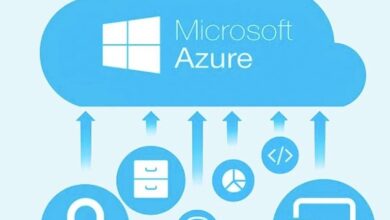
Welcome to your ultimate guide on ‘azure what is’. If you’ve ever wondered what Microsoft Azure truly is and how it’s reshaping the digital world, you’re in the right place. Let’s dive into the cloud like never before.





Azure What Is: A Complete Overview

When people ask ‘azure what is’, they’re often looking for more than just a definition—they want context, relevance, and real-world application. Microsoft Azure is a cloud computing platform launched by Microsoft in 2010, designed to build, test, deploy, and manage applications and services through a global network of data centers. It competes directly with Amazon Web Services (AWS) and Google Cloud Platform (GCP), offering a wide array of tools for developers, IT professionals, and enterprises.
Azure supports multiple programming languages, frameworks, and operating systems, making it a flexible solution for businesses of all sizes. Whether you’re running virtual machines, managing databases, or leveraging artificial intelligence, Azure provides the infrastructure to do it all in the cloud. According to Microsoft, over 95% of Fortune 500 companies use Azure for at least one aspect of their IT operations.
History and Evolution of Azure
Azure was first announced in October 2008 under the name ‘Windows Azure’ and officially launched in February 2010. Initially, it focused primarily on application hosting and platform-as-a-service (PaaS) offerings. Over the years, Microsoft has expanded Azure significantly, shifting from a niche PaaS platform to a full-fledged Infrastructure-as-a-Service (IaaS) and Software-as-a-Service (SaaS) powerhouse.
In 2014, Microsoft rebranded Windows Azure to simply ‘Microsoft Azure’ to reflect its broader capabilities beyond Windows-based applications. Since then, Azure has grown exponentially, adding services like Azure Active Directory, Azure Kubernetes Service, and Azure AI. The platform now supports Linux, open-source technologies, and hybrid cloud environments, making it a truly versatile ecosystem.
azure what is – Azure what is menjadi aspek penting yang dibahas di sini.
Core Components of Azure
The strength of Azure lies in its modular architecture. Key components include compute, storage, networking, and security services. Compute services like Virtual Machines and Azure App Services allow users to run applications in the cloud. Storage options such as Blob Storage, Disk Storage, and Data Lake Storage provide scalable and secure data management.
Networking features like Virtual Networks, Load Balancers, and Azure DNS enable seamless connectivity between cloud and on-premises systems. Security is handled through Azure Security Center, Azure Firewall, and Identity & Access Management tools. Together, these components form a robust foundation for modern cloud infrastructure.
“Azure is not just a cloud platform; it’s a comprehensive ecosystem that empowers innovation across industries.” — Satya Nadella, CEO of Microsoft
Azure What Is and How It Works
Understanding ‘azure what is’ also means grasping how it functions behind the scenes. At its core, Azure operates on a pay-as-you-go model, allowing users to consume only the resources they need. This eliminates the need for large upfront investments in hardware and enables scalability based on demand.
Data centers powering Azure are distributed globally, ensuring low latency and high availability. When you deploy an application on Azure, it runs on physical servers housed in these secure facilities. However, users interact with virtualized resources—virtual machines, containers, serverless functions—that abstract away the underlying hardware complexity.
The Role of Hypervisors and Virtualization
Virtualization is the backbone of Azure’s infrastructure. Microsoft uses Hyper-V, its proprietary hypervisor technology, to create and manage virtual machines. Each VM runs an isolated operating system environment, sharing physical resources efficiently among multiple tenants.
azure what is – Azure what is menjadi aspek penting yang dibahas di sini.
Beyond VMs, Azure also supports containerization via Azure Kubernetes Service (AKS). Containers offer lightweight, portable execution environments that enhance deployment speed and consistency. This dual support for VMs and containers gives developers flexibility in how they architect their applications.
Resource Groups and Management Hierarchy
In Azure, resources are organized using Resource Groups—a logical container that holds related resources for an Azure solution. This structure simplifies management, access control, and billing. For example, all components of a web application (VMs, databases, networks) can be grouped together and managed as a single unit.
Azure Resource Manager (ARM) is the deployment and management service that handles provisioning and lifecycle management of resources. Through ARM templates, users can automate deployments using Infrastructure-as-Code (IaC) principles, ensuring consistency and repeatability across environments.
- Resource Groups enable logical grouping of cloud assets
- ARM templates support automated, repeatable deployments
- Role-Based Access Control (RBAC) ensures secure resource management
Azure What Is: Key Services and Offerings
One of the most compelling answers to ‘azure what is’ lies in its vast portfolio of services. Azure offers over 200 services across various domains, including computing, analytics, storage, networking, AI, and IoT. These services are categorized into several major groups, each addressing specific business needs.
Compute Services
Azure’s compute services provide the processing power needed to run applications. Key offerings include:
azure what is – Azure what is menjadi aspek penting yang dibahas di sini.
- Azure Virtual Machines (VMs): Scalable VMs for Windows and Linux workloads. Users can choose from a wide range of sizes and configurations based on performance requirements. Learn more about Azure VMs.
- Azure App Service: A fully managed platform for building web and mobile apps without worrying about infrastructure. Supports .NET, Java, Node.js, Python, and PHP.
- Azure Functions: A serverless compute service that runs code in response to events. Ideal for microservices and event-driven architectures.
- Azure Kubernetes Service (AKS): Managed Kubernetes for deploying and managing containerized applications at scale.
Storage and Data Management
Data is the lifeblood of modern applications, and Azure provides robust solutions for storing and managing it. Key storage services include:
Azure Blob Storage: Object storage for unstructured data like images, videos, and backups.Offers tiered storage (Hot, Cool, Archive) for cost optimization.Azure Disk Storage: High-performance block storage for VMs.Supports SSD and HDD options with varying IOPS and throughput.Azure SQL Database: Fully managed relational database service based on SQL Server.Offers built-in high availability, security, and AI-powered performance tuning.
.Azure Cosmos DB: Globally distributed, multi-model NoSQL database with single-digit millisecond latency.Ideal for global applications requiring high scalability.”With Azure, we reduced our deployment time from weeks to minutes.” — IT Director, Fortune 500 Manufacturing Firm
Azure What Is and Its Global Infrastructure
Another critical aspect of ‘azure what is’ involves understanding its global reach.Microsoft Azure operates in over 60 regions worldwide, more than any other cloud provider.This extensive footprint ensures that businesses can deploy applications close to their users, minimizing latency and complying with local data sovereignty laws..
Each Azure region consists of one or more data centers connected via high-speed private fiber networks. These regions are grouped into geographical areas such as North America, Europe, Asia Pacific, and Middle East & Africa. Within each region, Azure offers Availability Zones—physically separate locations within a region that protect against data center failures.
Regions and Availability Zones
As of 2024, Azure has announced plans for 12 new regions, bringing its total to 72. Each region is designed to meet strict compliance standards, including GDPR, HIPAA, and ISO certifications. Availability Zones consist of three or more independent data centers, each with its own power, cooling, and networking.
azure what is – Azure what is menjadi aspek penting yang dibahas di sini.
This architecture enables fault-tolerant designs. For example, a company can deploy its application across multiple zones so that if one zone fails, traffic automatically reroutes to another. This is crucial for mission-critical systems requiring 99.99% uptime.
Edge Computing with Azure
Beyond centralized data centers, Azure extends its reach to the edge through services like Azure IoT Edge and Azure Stack Edge. These allow processing to occur closer to where data is generated—such as factories, retail stores, or remote field sites.
Azure IoT Edge enables running AI models and custom logic on edge devices, reducing the need to send all data to the cloud. Azure Stack Edge combines hardware and software to deliver cloud capabilities in disconnected or low-bandwidth environments. This hybrid approach is transforming industries like healthcare, manufacturing, and logistics.
- Azure operates in over 60 regions globally
- Availability Zones enhance resilience and uptime
- Edge computing brings cloud intelligence to remote locations
Azure What Is: Security and Compliance Features
Security is a top concern for any organization moving to the cloud, and understanding ‘azure what is’ includes recognizing its strong security posture. Microsoft invests over $1 billion annually in cybersecurity and employs more than 3,500 security experts to protect its cloud infrastructure.
Azure provides a shared responsibility model: Microsoft secures the infrastructure, while customers are responsible for securing their data, applications, and access controls. This model ensures clarity in security obligations and empowers organizations to implement best practices.
azure what is – Azure what is menjadi aspek penting yang dibahas di sini.
Built-in Security Tools
Azure offers a suite of native security tools to help detect, prevent, and respond to threats:
- Azure Security Center: Provides unified security management and advanced threat protection across hybrid cloud workloads. It continuously monitors for vulnerabilities and recommends remediation steps.
- Azure Defender: An extension of Security Center that adds cloud-native threat protection for servers, SQL databases, containers, and more.
- Azure Firewall: A managed, cloud-based network security service that protects Azure Virtual Network resources. It includes built-in high availability and unrestricted scalability.
- Azure DDoS Protection: Protects applications from distributed denial-of-service attacks with real-time monitoring and automatic mitigation.
Compliance and Certifications
Azure complies with a broad range of international and industry-specific standards. It holds over 140 compliance certifications, including:
- GDPR (General Data Protection Regulation)
- HIPAA (Health Insurance Portability and Accountability Act)
- ISO/IEC 27001, 27017, 27018
- SOC 1, SOC 2, SOC 3
- PCI DSS (Payment Card Industry Data Security Standard)
- CCPA (California Consumer Privacy Act)
This makes Azure a trusted choice for regulated industries such as finance, healthcare, and government. Organizations can leverage Azure’s compliance documentation to streamline their own audits and reduce risk.
“Azure’s compliance framework helped us achieve HIPAA certification in half the time.” — CISO, Healthcare Provider
Azure What Is: AI and Machine Learning Capabilities
One of the most transformative aspects of ‘azure what is’ is its integration of artificial intelligence and machine learning. Azure AI is a comprehensive suite of services that enables developers and data scientists to build intelligent applications without deep expertise in AI.
From natural language processing to computer vision and predictive analytics, Azure provides pre-built models and tools to accelerate AI adoption. These capabilities are used across industries—for customer service chatbots, fraud detection, medical imaging analysis, and supply chain optimization.
azure what is – Azure what is menjadi aspek penting yang dibahas di sini.
Azure Cognitive Services
Azure Cognitive Services are APIs that enable applications to see, hear, speak, understand, and interpret user needs. Key services include:
- Computer Vision API: Analyzes images to identify objects, faces, text, and emotions. Used in retail for shelf monitoring and in healthcare for radiology support.
- Text Analytics API: Extracts sentiment, key phrases, and entities from text. Useful for social media monitoring and customer feedback analysis.
- Speech Services: Converts speech to text and vice versa, enabling voice assistants and transcription tools.
- Translator Text API: Provides real-time language translation for global applications.
Azure Machine Learning Studio
Azure Machine Learning is a cloud-based environment for training, deploying, and managing machine learning models. It supports both code-first (Python, R) and no-code (drag-and-drop) approaches, making it accessible to a wide audience.
Key features include automated ML (AutoML), which tests multiple algorithms to find the best model, and MLOps for managing the ML lifecycle. Models can be deployed as web services or integrated into applications via REST APIs. Explore Azure Machine Learning.
- Pre-built AI APIs reduce development time
- AutoML simplifies model selection and tuning
- MLOps enables scalable model deployment and monitoring
Azure What Is: Pricing and Cost Management
Understanding ‘azure what is’ wouldn’t be complete without discussing pricing. Azure uses a consumption-based model, where you pay only for what you use. This contrasts with traditional IT models that require large capital expenditures for hardware and software licenses.
Pricing varies by service, region, and usage level. For example, a basic Linux VM might cost as little as $0.013/hour, while advanced AI services are priced per transaction or compute time. Azure also offers reserved instances and hybrid benefits to reduce costs for long-term commitments.
azure what is – Azure what is menjadi aspek penting yang dibahas di sini.
Cost Estimation Tools
To help users plan and manage expenses, Azure provides several cost management tools:
- Azure Pricing Calculator: Allows users to estimate costs for selected services before deployment. Try the Azure Pricing Calculator.
- Total Cost of Ownership (TCO) Calculator: Compares the cost of running on-premises infrastructure versus Azure, factoring in hardware, power, cooling, and labor.
- Azure Cost Management + Billing: Provides real-time insights into spending, budget alerts, and recommendations for optimization.
Free Tier and Learning Resources
Azure offers a free account with $200 in credits for new users, valid for 30 days. Additionally, over 55 services are available for free indefinitely, including Azure Functions, Blob Storage (limited), and App Service (free tier).
For learners, Microsoft Learn provides free, interactive modules on Azure fundamentals, security, AI, and more. These resources make it easy to get started without financial risk. Start learning Azure today.
“The free tier allowed us to prototype our app without any upfront cost.” — Startup Founder
What is Azure and why is it important?
Azure is Microsoft’s cloud computing platform that provides infrastructure, platform, and software services over the internet. It’s important because it enables businesses to scale quickly, reduce IT costs, innovate faster, and leverage advanced technologies like AI and IoT without managing physical hardware.
azure what is – Azure what is menjadi aspek penting yang dibahas di sini.
How does Azure compare to AWS and Google Cloud?
Azure, AWS, and Google Cloud are the top three cloud providers. Azure excels in hybrid cloud integration and enterprise support, especially for organizations already using Microsoft products like Windows Server and Active Directory. AWS has the largest market share and most mature service catalog, while Google Cloud leads in data analytics and machine learning.
Can small businesses use Azure effectively?
Absolutely. Azure’s pay-as-you-go model and free tier make it accessible to small businesses. Services like Azure App Service and Azure SQL Database allow startups to launch web applications quickly without hiring a full IT team. Scalability ensures that as the business grows, infrastructure can grow with it.
Is Azure secure for enterprise use?
azure what is – Azure what is menjadi aspek penting yang dibahas di sini.
Yes, Azure is highly secure and trusted by enterprises globally. It offers advanced security tools, compliance certifications, and a shared responsibility model. With features like Azure Security Center, Defender, and Identity Protection, organizations can maintain strong security postures while leveraging the cloud’s agility.
How can I start learning Azure?
The best way to start is by creating a free Azure account, which includes $200 in credits and access to free services. Then, explore Microsoft Learn’s free training paths on Azure fundamentals, administration, and development. Hands-on labs and certifications like AZ-900 (Azure Fundamentals) provide structured learning and career advancement.
Understanding ‘azure what is’ goes far beyond a simple definition. It’s about recognizing Azure as a dynamic, secure, and scalable cloud platform that powers innovation across industries. From its global infrastructure and AI capabilities to its flexible pricing and robust security, Azure offers a comprehensive solution for modern digital transformation. Whether you’re a developer, IT professional, or business leader, embracing Azure can unlock new levels of efficiency, agility, and growth. The future is in the cloud—and Azure is leading the way.
Further Reading: