If you’re building software in today’s fast-paced world, mastering Azure DevOps isn’t just an option—it’s a necessity. This powerful platform streamlines development, boosts collaboration, and accelerates delivery like never before.
What Is Azure DevOps and Why It Matters

Azure DevOps is Microsoft’s comprehensive suite of cloud-based tools designed to support the entire software development lifecycle. From planning and coding to testing, deployment, and monitoring, it provides a unified platform for teams to collaborate efficiently and deliver high-quality software faster. Whether you’re a startup or an enterprise, Azure DevOps scales with your needs and integrates seamlessly with popular tools and frameworks.
Core Components of Azure DevOps
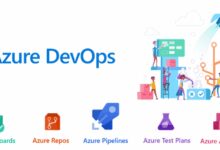
Azure DevOps isn’t a single tool but a collection of integrated services that work together to support DevOps practices. These include:
- Azure Repos: Git repositories for source control, enabling teams to manage code efficiently with branching, pull requests, and code reviews.
- Azure Pipelines: A CI/CD (Continuous Integration and Continuous Delivery) service that automates building, testing, and deploying applications across multiple platforms and clouds.
- Azure Boards: Agile planning tools like Kanban boards, backlogs, and work item tracking to manage project tasks and sprints.
- Azure Test Plans: Comprehensive test management for manual and exploratory testing, ensuring software quality before release.
- Azure Artifacts: Package management for sharing and consuming libraries (e.g., NuGet, npm, Maven) across teams.
Each component can be used independently or together, offering flexibility based on team size and project complexity.
How Azure DevOps Fits into Modern DevOps Culture
DevOps is more than just tools—it’s a cultural shift that emphasizes collaboration, automation, measurement, and sharing (the CAMS model). Azure DevOps supports this culture by breaking down silos between development and operations teams. With features like automated pipelines and real-time dashboards, it enables faster feedback loops, reduces manual errors, and increases deployment frequency.
According to a Microsoft Learn resource, organizations using Azure DevOps report up to a 50% reduction in deployment time and a significant improvement in mean time to recovery (MTTR).
“Azure DevOps bridges the gap between idea and production, making it a cornerstone of modern software delivery.” — Microsoft DevOps Documentation
Azure DevOps vs. Competitors: A Strategic Comparison
While several platforms offer DevOps capabilities, Azure DevOps stands out due to its deep integration with Microsoft’s ecosystem, enterprise-grade security, and pricing transparency. Let’s compare it with key competitors like GitHub Actions, Jenkins, and GitLab.
Azure DevOps vs. GitHub Actions
Both Azure DevOps and GitHub Actions offer robust CI/CD pipelines. However, GitHub Actions is tightly coupled with GitHub repositories, making it ideal for open-source or GitHub-centric teams. In contrast, Azure DevOps supports any Git repository, including GitHub, Bitbucket, and Azure Repos, giving it broader flexibility.
Moreover, Azure DevOps provides built-in project management (Boards), test plans, and artifact management—features that require third-party integrations when using GitHub Actions alone. For teams wanting an all-in-one solution, Azure DevOps is often the superior choice.
Azure DevOps vs. Jenkins
Jenkins remains a popular open-source automation server, especially among organizations with existing on-premise infrastructure. However, it requires significant setup, maintenance, and plugin management. Azure DevOps, being a fully managed SaaS platform, eliminates the need for infrastructure management.
While Jenkins offers unparalleled customization through plugins, Azure DevOps provides a more user-friendly interface, native cloud integration, and better support for enterprise compliance. For teams prioritizing speed and scalability over deep customization, Azure DevOps is the more efficient option.
Azure DevOps vs. GitLab
GitLab is a strong competitor, offering a complete DevOps platform from planning to monitoring. However, Azure DevOps excels in integration with Microsoft products like Visual Studio, .NET, Azure App Services, and Active Directory. This makes it particularly attractive for enterprises already invested in the Microsoft ecosystem.
GitLab’s single application approach simplifies architecture, but Azure DevOps’ modular design allows teams to adopt only the services they need. Additionally, Azure DevOps offers more granular access controls and audit logging, which are critical for regulated industries.
Setting Up Your First Azure DevOps Project
Getting started with Azure DevOps is straightforward. Whether you’re managing a small team or a large organization, the setup process is intuitive and well-documented. Here’s how to create your first project and begin leveraging its full potential.
Creating an Azure DevOps Organization
The first step is to create an Azure DevOps organization. Visit dev.azure.com and sign in with your Microsoft account. You’ll be prompted to create a new organization, which acts as a container for all your projects.
An organization allows you to manage user access, security policies, and billing across multiple projects. You can also link it to your Azure subscription for enhanced resource management and cost tracking.
Creating and Configuring a New Project
Once your organization is set up, create a new project by clicking “New Project.” You’ll need to provide a name, description, and choose between public or private visibility. For most teams, a private project is recommended to ensure code and data security.
During project creation, you can choose which Azure DevOps services to enable—Repos, Pipelines, Boards, Test Plans, and Artifacts. Even if you don’t use all services immediately, enabling them allows for future scalability.
Inviting Team Members and Managing Permissions
Collaboration is at the heart of Azure DevOps. Invite team members by navigating to Project Settings > Permissions > Users. You can assign roles such as Stakeholder, Reader, Contributor, or Project Administrator based on their responsibilities.
For enterprise environments, integrate Azure Active Directory (Azure AD) to manage identities centrally. This ensures compliance with organizational security policies and simplifies user provisioning and deprovisioning.
Mastering Azure Repos: Version Control Done Right
Azure Repos is the backbone of source code management in Azure DevOps. It supports both Git and Team Foundation Version Control (TFVC), though Git is the preferred choice for most modern teams due to its distributed nature and branching capabilities.
Initializing a Git Repository in Azure DevOps
To start using Azure Repos, initialize a new Git repository in your project. You can do this via the web interface or command line. Once created, clone the repository to your local machine using:
git clone https://dev.azure.com/your-organization/your-project/_git/your-repo
From there, you can begin committing code, creating branches, and pushing changes back to the cloud.
Branching Strategies and Pull Requests
Effective branching is crucial for maintaining code quality and enabling parallel development. Azure DevOps supports popular strategies like Git Flow, GitHub Flow, and Trunk-Based Development.
Pull requests (PRs) are central to code review processes. When a developer completes a feature, they create a PR to merge their branch into the main branch. Team members can review the code, add comments, request changes, and approve the merge—all within Azure DevOps.
You can also enforce branch policies, such as requiring a minimum number of reviewers or passing automated builds before merging. This ensures that only high-quality, tested code reaches production.
“Pull requests in Azure DevOps turn code reviews into collaborative conversations, improving both code quality and team alignment.”
Automating Workflows with Azure Pipelines
Azure Pipelines is one of the most powerful features of Azure DevOps, enabling Continuous Integration (CI) and Continuous Delivery (CD) with minimal configuration. It supports a wide range of languages, platforms, and deployment targets—including Azure, AWS, Google Cloud, and on-premise servers.
Creating Your First CI Pipeline
To create a CI pipeline, go to the Pipelines section in your project and click “New Pipeline.” You can choose to use a YAML configuration file stored in your repository or use the classic editor (though YAML is recommended for version control and reusability).
Azure Pipelines automatically detects your project type (e.g., .NET, Node.js, Python) and suggests a starter template. You can customize the pipeline to run tests, build artifacts, and publish results.
For example, a simple .NET CI pipeline might look like this:
trigger:
  - main

pool:
  vmImage: 'windows-latest'

steps:
- task: DotNetCoreCLI@2
  inputs:
    command: 'build'
    projects: '**/*.csproj'
- task: DotNetCoreCLI@2
  inputs:
    command: 'test'
    projects: '**/*Tests.csproj'
This pipeline triggers on every push to the main branch, builds the solution, and runs unit tests.
Setting Up CD Pipelines for Seamless Deployment
Continuous Delivery extends CI by automatically deploying code to staging or production environments. In Azure Pipelines, you can define multi-stage pipelines with approvals, gates, and deployment strategies like blue-green or canary.
To set up a CD pipeline, define stages for different environments (e.g., Dev, QA, Prod). Each stage can have pre-deployment approvals, automated tests, and post-deployment validations.
For example, deploying a web app to Azure App Service can be done with a simple task:
- task: AzureWebApp@1
  inputs:
    azureSubscription: 'your-subscription'
    appName: 'your-web-app'
    package: '$(System.DefaultWorkingDirectory)/**/*.zip'
This ensures consistent, repeatable deployments with full traceability.
Using Pipeline Templates and Variables
As your pipeline complexity grows, reusability becomes key. Azure Pipelines supports templates to define reusable pipeline components. You can store templates in a central repository and reference them across projects.
Variables allow you to parameterize your pipelines. Use built-in variables (like $(Build.BuildId)) or define custom ones for environment-specific settings. Secure variables (like passwords or API keys) can be stored in Azure Key Vault and accessed via service connections.
Enhancing Collaboration with Azure Boards
Azure Boards is the agile project management engine within Azure DevOps. It helps teams plan, track, and discuss work across the development lifecycle using customizable work items, backlogs, and dashboards.
Managing Work Items and Backlogs
Work items are the building blocks of Azure Boards. They include User Stories, Tasks, Bugs, Epics, and Features. Each work item contains fields for title, description, priority, assignee, and status.
Teams can organize work items into backlogs and sprints. The Product Backlog holds all upcoming work, while Sprint Backlogs contain items committed for the current iteration. Drag-and-drop functionality makes reprioritizing easy.
You can also link work items to code (via commits), builds, and test cases, creating full traceability from requirement to release.
Using Kanban Boards for Visual Workflow Management
Kanban boards provide a visual representation of work in progress. Columns represent workflow stages (e.g., To Do, In Progress, Review, Done), and cards represent work items.
Teams can set work-in-progress (WIP) limits to prevent bottlenecks and improve flow efficiency. Swimlanes can be used to group items by team, priority, or feature area.
Custom rules can automate state transitions—for example, moving a task to “Review” when a pull request is created.
Generating Insights with Dashboards and Analytics
Azure Boards includes powerful analytics tools to measure team performance. Built-in charts include Burndown, Velocity, Cumulative Flow, and Cycle Time.
Create custom dashboards by adding widgets like work item lists, query results, build status, and test results. Share dashboards with stakeholders to provide real-time visibility into project health.
Power BI integration allows for advanced reporting and data export for executive summaries.
Ensuring Quality with Azure Test Plans
Delivering reliable software requires rigorous testing. Azure Test Plans provides tools for manual, exploratory, and automated testing, ensuring that quality is built into every release.
Creating and Running Manual Test Suites
Manual testing is still essential for validating user experience and edge cases. In Azure Test Plans, you can create test suites and test cases with detailed steps, expected results, and attachments.
Testers can run test cases directly in the browser, logging results and capturing screenshots or videos. Failed tests are automatically linked to bug work items for tracking.
You can organize test plans by release or feature, making it easy to regression test before deployment.
Performing Exploratory Testing
Exploratory testing allows testers to investigate the application without predefined scripts. Azure Test Plans includes a Test Runner that records session activity, including keystrokes, screenshots, and logs.
This session data can be converted into formal test cases or bug reports, turning ad-hoc testing into documented quality assurance.
It’s especially useful during sprint reviews or when validating complex user workflows.
Integrating Automated Tests
While Azure Test Plans focuses on manual testing, it integrates seamlessly with automated tests run via Azure Pipelines. You can publish test results from frameworks like NUnit, xUnit, JUnit, or Selenium.
Test results are displayed in dashboards, showing pass/fail rates, trends, and coverage. This enables teams to identify flaky tests and improve test reliability over time.
Scaling with Azure Artifacts and Package Management
As teams grow, managing shared libraries and dependencies becomes critical. Azure Artifacts solves this by providing a centralized package management system for NuGet, npm, Maven, and Python packages.
Creating and Hosting Private Feeds
In Azure Artifacts, you can create private feeds to host internal packages. This ensures that sensitive or proprietary code isn’t exposed publicly.
To create a feed, go to Artifacts > Create Feed. You can set permissions, retention policies, and upstream sources (e.g., connect to npmjs.org for public packages).
Once created, developers can publish and consume packages using standard CLI tools:
nuget push MyPackage.1.0.0.nupkg -Source https://pkgs.dev.azure.com/your-org/your-project/_packaging/your-feed/nuget/v3/index.json
Integrating with CI/CD Pipelines
Azure Artifacts integrates directly with Azure Pipelines. You can restore packages during build and publish new versions after successful builds.
For example, in a .NET project, add the .NET Core task to restore packages from your feed:
- task: DotNetCoreCLI@2
  inputs:
    command: 'restore'
    projects: '**/*.csproj'
    feedsToUse: 'select'
    vstsFeed: 'your-feed'
This ensures consistent dependency resolution across environments.
Managing Dependencies and Security
Azure Artifacts helps manage dependency hygiene. You can view which packages are used across projects and identify outdated or vulnerable versions.
Integration with Azure Security Center and third-party tools like WhiteSource or Snyk enables automatic scanning for known vulnerabilities in your packages.
By enforcing package signing and access controls, you can maintain a secure software supply chain.
Best Practices for Optimizing Azure DevOps
To get the most out of Azure DevOps, follow these proven best practices that enhance efficiency, security, and collaboration.
Adopt Infrastructure as Code (IaC)
Use tools like Azure Resource Manager (ARM) templates, Terraform, or Bicep to define infrastructure in code. Store these templates in Azure Repos and deploy them via Azure Pipelines. This ensures consistency, version control, and auditability of your environments.
Implement Security Early (Shift Left)
Integrate security checks into your CI/CD pipeline. Run static code analysis (SAST), dependency scanning, and container scanning as early as possible. Use Azure DevOps’ built-in security policies and integrate with Microsoft Defender for Cloud.
Monitor and Optimize Pipeline Performance
Regularly review pipeline execution times and resource usage. Use parallel jobs, caching, and self-hosted agents for performance-critical builds. Set up alerts for failed pipelines and monitor trends over time.
What is Azure DevOps used for?
Azure DevOps is used to manage the entire software development lifecycle. It supports version control (Azure Repos), CI/CD automation (Azure Pipelines), agile project management (Azure Boards), testing (Azure Test Plans), and package management (Azure Artifacts). It’s ideal for teams looking to improve collaboration, automate workflows, and deliver software faster and more reliably.
Is Azure DevOps free to use?
Yes, Azure DevOps offers a free tier for small teams (up to 5 users) with unlimited private repositories, CI/CD minutes, and work item tracking. Additional users and resources can be added via paid plans. Some advanced features like large-scale test plans or additional parallel jobs require subscription upgrades.
How does Azure DevOps integrate with GitHub?
Azure DevOps can connect to GitHub repositories directly. You can trigger pipelines when code is pushed to GitHub, use GitHub issues for tracking, and even manage GitHub Actions from within Azure DevOps. This hybrid approach allows teams to leverage GitHub’s community while benefiting from Azure DevOps’ enterprise features.
Can Azure DevOps deploy to non-Microsoft clouds?
Absolutely. Azure Pipelines supports deployment to AWS, Google Cloud Platform, Kubernetes clusters, and on-premise servers. With over 1,000+ tasks in the marketplace, you can automate deployments across multi-cloud and hybrid environments.
What are the key benefits of using Azure DevOps over Jenkins?
Azure DevOps offers a fully managed, scalable, and integrated platform with minimal setup. Unlike Jenkins, it doesn’t require server maintenance, plugin management, or complex configuration. It provides built-in security, audit logs, and native support for modern DevOps practices, making it more suitable for enterprise teams focused on speed and compliance.
Mastering Azure DevOps transforms how teams build and deliver software. From seamless version control with Azure Repos to powerful CI/CD pipelines and agile project tracking, it offers a complete toolkit for modern development. By leveraging its integrated services and best practices, organizations can accelerate delivery, improve quality, and foster collaboration across teams. Whether you’re just starting or scaling globally, Azure DevOps provides the foundation for DevOps success in 2024 and beyond.
Further Reading:
